California signed SB 947, the No Robo Bosses Act, on September 30, 2026. It starts July 1, 2027. A lesson from the AT&T breakup on rules with a date, plus a 14-day plan for people software.
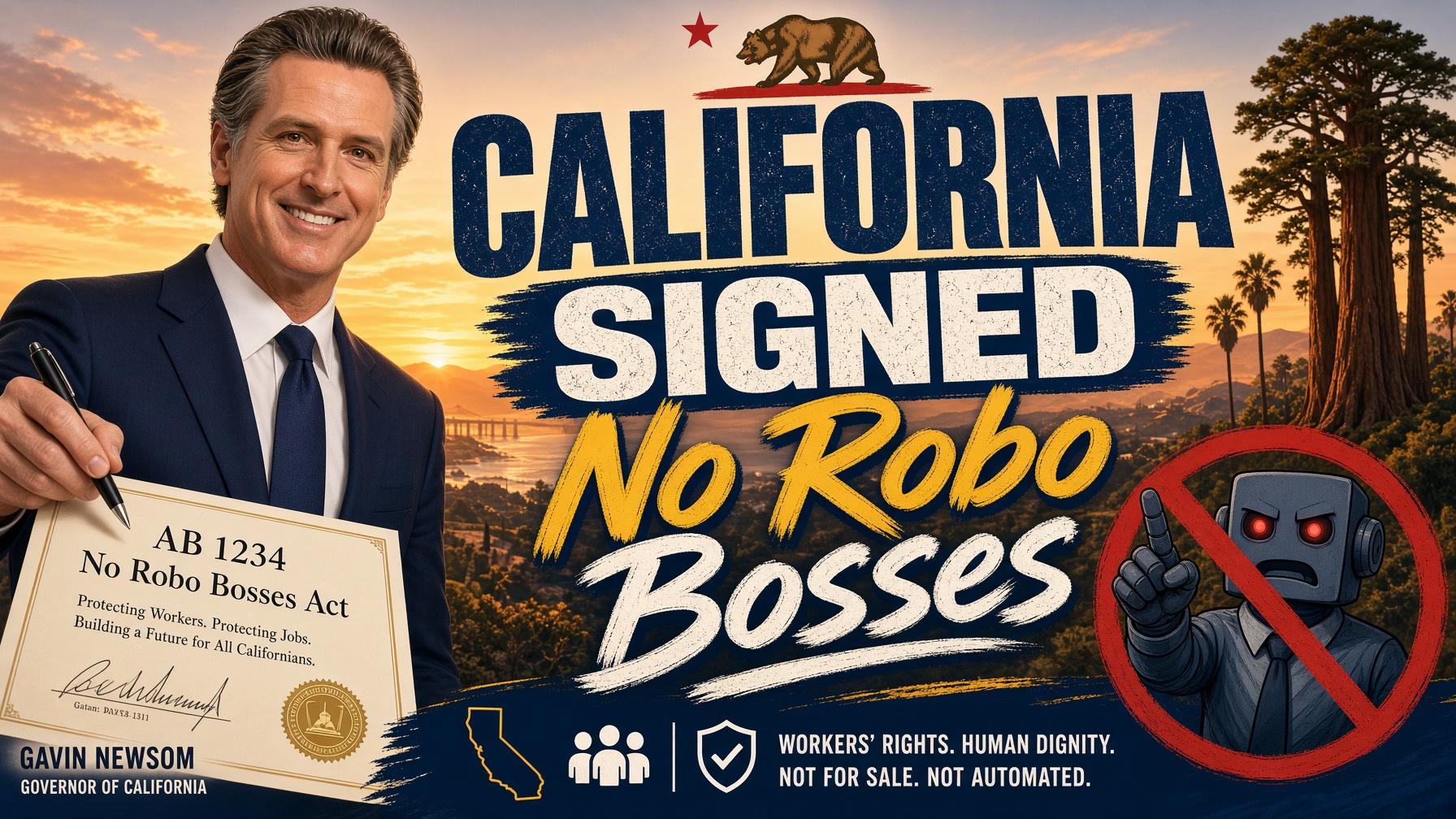
On September 30, 2026, California made it illegal to let a machine be the only reason someone gets fired. The rule starts July 1, 2027. Most people software companies will treat that date as a legal problem. It is a market reset. I saw one of those up close.
When the rules change on a fixed date, the market splits into the ready and the scrambling. I saw what happened when the government broke up AT&T.
The breakup took effect in 1984. Before it, one company ran the phone system. After it, the whole industry had to rebuild how it worked. New companies. New systems. New rules about who owned what.
Everyone knew the date. Most people still waited.
Then the internet arrived on top of that new market. And the industry hit a wall nobody planned for. Companies could train people on internet technology. That part was easy. The bigger gap was basic PC experience. Most people in the industry had never touched a personal computer.
I had. I bought a Radio Shack computer before personal computers were popular. People thought it was a toy. It was not a toy. That one early move got me pulled into projects other people could not touch.
Here is the lesson I carried out of that era. A rule change does not reward the smartest company. It rewards the company that was ready the morning the rule took effect. Everyone else spends the next year catching up and explaining why.
SB 947, the No Robo Bosses Act, stops an employer from using an automated decision system as the sole basis for discipline or firing.
If AI is the principal basis for the decision, a human has to back it up with other information. A manager's view. Peer review. The personnel file. The worker gets a written notice afterward. That notice includes what data the system used and a human to contact. The Labor Commissioner can enforce it. The bill sets a civil penalty of $500 per violation.
Know what it is not. It is not a ban on AI in hiring. It does not cover gig worker deactivation the way an earlier draft did. Governor Newsom vetoed that earlier version. The signed bill is narrower. It is also real, and it has a start date: July 1, 2027.
California employers that use HR, performance, or people-analytics tools feel it first. Their legal teams will start asking vendors hard questions this quarter.
Then the SaaS companies that sell those tools into the state. If your product scores people, ranks people, or flags people for action, your buyer now has a deadline. That means you have one too.
Software that lets a score fire someone is about to become the story, not the feature.
For years, "the AI decides" sold well. It sounded fast. It sounded fair. It sounded like less work for managers.
On July 1, 2027, in California, that line becomes a liability. The buyer will ask one plain question. Where is the human, and can you show me the notice?
If your answer is a long pause, you lose the deal. Not to a better algorithm. To a vendor that can point at a person.
Here is the brutal truth: a compliance deadline is a reputation deadline with a date on it.
When AT&T broke up, the date was public. The companies that waited did not lose because they were dumb. They lost because they treated the date as a finish line instead of a starting gun. By the time they moved, the ready ones had the customers.
SB 947 works the same way. The law sets the floor. The market sets the bar. A cautious HR buyer will not want to be the test case for a $500-per-violation penalty. They will pick the vendor whose product already shows the human, the notice, and the record. They will pick it in 2026, not on June 30, 2027.
The company that markets "the AI decides" will spend 2027 explaining itself.
Write the sentence your product will be able to say on July 1, 2027, then build backward from it.
That last step is the one most companies skip. Do not skip it. The product change protects you from the regulator. The first-line change wins you the buyer.
Because your buyer's legal team is reading the bill this quarter. Their vendor reviews for next year are happening now. If your page still says the software decides, you will not make the shortlist.
The ready company gets to call it leadership. The late company calls it compliance. Only one of those wins deals.
Governor Newsom signed it on September 30, 2026. It takes effect July 1, 2027.
No. It stops employers from using an automated decision system as the sole basis for discipline or firing. It does not ban AI in hiring.
A human has to back up the decision with other information, such as a manager's view, peer review, or the personnel file. The worker gets a written notice that includes the data used and a human to contact.
The bill sets a civil penalty of $500 per violation. The Labor Commissioner can enforce it.
The signed bill does not cover gig deactivation the way an earlier draft did. Newsom vetoed that earlier version.
No. This is a market read and a positioning plan. Talk to counsel about your legal duties.
If your first line still says the software decides, change the line before a buyer does it for you. Start with the free audit at seriodesignfx.com/audit.
Need the July 2027 page built and your founder voice out front on it? That is what M.A.P. (Maverick Advantage Platform) does. It turns what you know into authority content on a schedule, so buyers hear you first. Use the contact page to scope it.
I'm Charles K. Davis, Fractional CDO at SERIO Design FX, the team behind M.A.P. (Maverick Advantage Platform) and M.A.D. (Maverick Advantage Design).
P.S. This is for founders selling people software into California. If your product does not touch employment decisions, skip this one.
M.A.D. Designs Your Brand. M.A.P. Makes You Known For It.
Stop Reading. Start Seeing.