In 2016 Dentsu admitted billing Toyota and 100+ clients for digital ads that didn’t run as invoiced. Here’s what the trust crisis of marketing really teaches — and how I rebuilt a brand accused of the same thing, using proof instead of apologies.
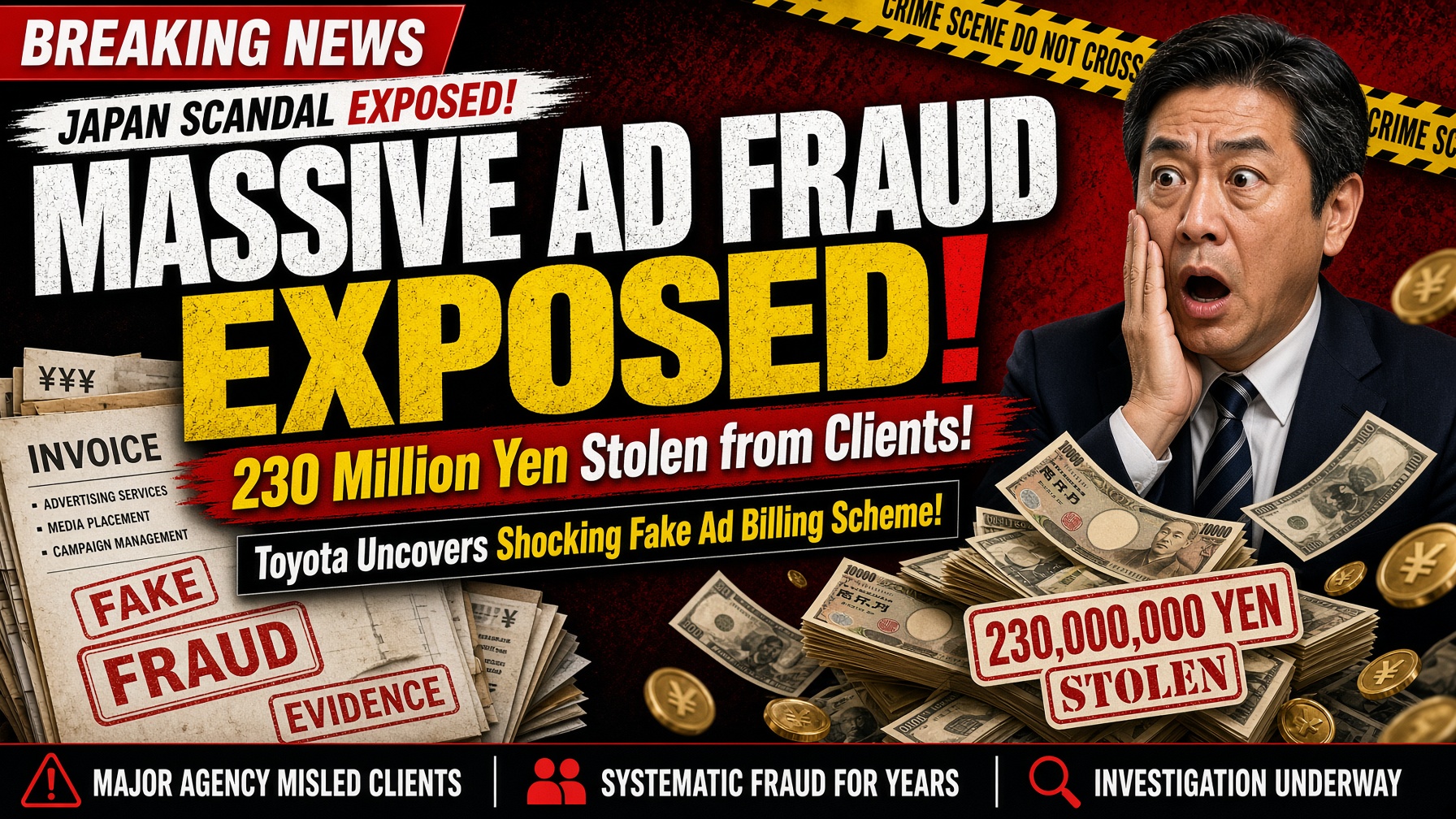
Toyota didn’t catch the overbilling because they were paranoid. They caught it because someone finally asked for proof.
In September 2016, Dentsu Inc. — the largest advertising agency in Japan and one of the biggest in the world — admitted that its performance-marketing arm had been charging clients for digital ads that didn’t run the way the invoices said they did. The company reported roughly 633 suspicious transactions across 111 clients. In about 14 of those cases, fees were charged for ad placements that never happened at all. The confirmed inappropriate billing came to around 230 million yen. The client who first pulled the thread was Toyota.
I read that story and felt something most people didn’t. Not shock. Recognition. I had walked into the exact same fire five years later, on the other side of the world, and I was the one hired to put it out.
Here is the short version, confirmed by Dentsu’s own public statement. Starting around November 2012, Dentsu’s digital operation in Japan ran what the company later called “inappropriate operations” on media buys for more than a hundred advertisers. Placement periods didn’t match what clients paid for. Performance results were reported that didn’t happen. Invoices didn’t line up with actual delivery. Some of it Dentsu called human error. Some of it it did not.
Toyota noticed. Toyota asked questions. And once one sophisticated client started asking for the underlying data, the whole thing came apart. Dentsu moved its verification function into an independent section, notified the affected clients, and started repaying. The bill was small in yen. The bill in trust was enormous. Ten years later, the Dentsu name still gets pulled into the conversation every time marketers argue about whether an agency can be trusted with their media dollars.
That is the pattern. Not the fraud. The opacity. The client could not see what the agency saw. So the client had to trust. And trust, with no way to verify, is just a countdown.
In 2021, right after COVID, I was brought in as digital campaign manager at a Wisconsin civic organization called Wisconsin Voices. I stayed until December 2022.
They didn’t hire me because things were going well. They hired me because the organization had been accused of something almost identical to what took down Dentsu’s reputation: securing grant money on behalf of nonprofit partners — money the partners said never reached them. Whether every accusation was fair or not, the damage was done. The board did the only thing that resets a trust crisis. They cleared the house. The entire staff was let go except the operations director. Then they brought in an entirely new team. I was part of that team.
My first day, the room was quiet in the way a room gets quiet when everyone knows the building is still smoking. Partners were angry. Some were already gone. The brand was radioactive. And my job was to turn that reputation around in public, where everyone could watch us either succeed or fail.
I wasn’t scared. I was excited. Because I had seen this movie before. I saw what happened when the government broke up AT&T. I survived the International Harvester to Navistar collapse. I know what a system looks like right before it either rebuilds or dies. And I knew the way out of a trust crisis is never a better apology. It’s proof.
Clients stop trusting agencies for one reason: they were asked to believe claims they couldn’t check. That’s it. That’s the whole disease.
Every agency trust crisis — Dentsu, the old MediaCom fabricated-data cases, the transparency fights that pushed advertiser groups to demand audits — traces back to the same root. The agency held the data. The client held the invoice. Between those two things sat a gap. And in that gap, “inappropriate operations” grow like mold. Sometimes it’s fraud. More often it’s drift — a placement that slipped, a number that got rounded up, a result that got reported as a win because admitting the miss felt worse. It doesn’t matter which. To the client, a comfortable lie and an honest mistake look identical when neither one comes with receipts.
Here is the brutal truth most agencies still won’t say out loud: your reporting is a trust exercise, and every CMO who has been burned once will never accept a trust exercise again. They don’t want your dashboard. They want the raw log. They want to log in themselves. They want a number they can pull without asking you first.
When I walked into Wisconsin Voices, the old model was dead on arrival. Nobody was going to take our word that the work was real. So we stopped asking them to.
You rebuild trust by handing the proof to the people who doubt you and letting them present it in their own words. You don’t defend yourself. You let the evidence defend you.
At Wisconsin Voices, I didn’t write a single press release swearing we’d changed. Instead we did five things, and every one of them was built on proof, not promises.
First, we brought the new leadership out of hiding. The organization had two new executive directors, and their personal brands carried real, checkable credibility. One was working with the LGBTQ community in South America through the U.S. State Department — a serious, verifiable association you cannot fake. The other held elected public office. We stopped hiding the leadership behind an org logo and put real, named, accountable humans in front of the partners. You can’t build trust with a logo. You build it with a face that has something to lose.
Second, we flipped the reporting. Instead of us telling partners how great the work was, we had the partners present their own success with Wisconsin Voices. We recorded those presentations on video. We built a YouTube channel out of them. The proof didn’t come from our mouths. It came from theirs, on the record, where anyone could watch it.
Third, we showed the results in public where they couldn’t be edited. We won grants from the U.S. State Department and from a national voter-activism group out of Washington. When the Votercade rolled through Milwaukee, we managed it. It made the local news. I ran a Facebook Live from the ground. Jesse Jackson came to a voter-awareness picnic. None of that was a claim in a slide deck. It was a public event with witnesses and cameras.
The partners who never got their grant money did not come back. I want to be honest about that. Receipts don’t fix what actually went wrong — they can only prove what actually went right. But the partners who stayed? They didn’t just stay. They got pulled into a wave of public awareness they could never have bought on their own. Standing next to verifiable proof made them stronger, too.
The Dentsu–Toyota case isn’t ancient history you read about. It’s a live warning, and there’s a 90-day window to act on it before your competitors — or your clients — force the issue for you.
If you run an agency, do this now. Move verification of placement, delivery, and billing into a function that does not report to the people doing the buying. That is the exact fix Dentsu was forced into after the fact. Do it before you’re forced. Give clients direct, near-real-time access to the same data you see — the platform logs, the ad-server reports, the third-party numbers. Publish a plain “how we bill and how we prove it” document that any prospect can read before they sign. Turn transparency into your pitch instead of your liability.
If you’re a client — a CMO, a founder, a marketing lead — stop accepting the dashboard as proof. A dashboard is something the agency built. Ask for the raw platform login. Ask for an itemized invoice matched line-by-line to delivery data. Ask for a quarterly sample where you or a third party pull a handful of invoices and check them against what actually ran. An agency that flinches at that request has just told you everything you needed to know.
The market has already split into two kinds of agencies. The ones still asking you to trust them. And the ones handing you the receipts before you ask. After the next Dentsu-sized story breaks, the first kind won’t get the meeting.
In September 2016, Dentsu Inc. publicly admitted its Japanese performance-marketing operation had run inappropriate digital-ad transactions for Toyota and more than 100 other clients. Dentsu reported roughly 633 suspicious transactions across 111 clients, with about 14 cases where fees were charged for placements that never ran, totaling around 230 million yen. Toyota was the client that first flagged the discrepancies.
Because the underlying problem — clients being billed for media they cannot independently verify — never went away. The Dentsu case became the reference point marketers cite whenever agency transparency, media auditing, and proof of delivery come up. It’s less about one company’s mistakes and more about a whole industry’s dependence on trust without verification.
By making verification structural instead of optional. That means giving clients direct access to raw platform and ad-server data, itemizing invoices against actual delivery, moving billing verification into a team independent of the buyers, and inviting periodic third-party or client-run audits. Proof the client can pull themselves beats any report the agency hands over.
Ask for the receipts before you accuse anyone. Request raw platform logins, third-party verification data, and an itemized invoice matched line-by-line to delivery. Pull a sample and reconcile it. The point isn’t to catch fraud — it’s to remove the gap where fraud and honest error both hide. An agency that resists straightforward verification has answered the question for you.
Yes, but only with proof, not apologies. In my own experience turning around a nonprofit hit with almost the same accusation, the rebuild came from letting partners present their own verified results, putting named and accountable leadership in front of stakeholders, and generating public, on-the-record wins. What can’t be rebuilt is a relationship with a partner who was actually shorted — receipts prove what went right, they don’t undo what went wrong.
Dentsu learned the expensive way. Toyota didn’t want a better relationship. Toyota wanted the data. And the second one serious client started asking for proof, “trust us” stopped being an option for anyone.
That’s the whole game now. You either build a business that hands over the receipts before anyone asks, or you build one that’s one audit away from a headline. I’ve stood in the burned-out building. I’ve done the rebuild. It only ever works one way.
If you’re an executive staring at a media budget you can’t fully verify, or you’re rebuilding a brand that lost the room, that’s the work I do as a Fractional CDO — 90 days, structural transparency, proof your clients can pull themselves. Book a consult and let’s map your window before it closes.
Stop Reading. Start Seeing.
— Charles K Davis, Fractional CDO
P.S. If you want a consultant who’ll tell you your reporting is fine and your clients love you, keep scrolling. I’m the one who asks to see the raw logs. Most agencies hate that question. Your best clients are already asking it.