
Your competitors are debating Google's appeal. The smart money is building alternative app stores in the Philippines—the country with the highest smartphone usage in Asia—right now.
I was inside Illinois Bell in 1984 when AT&T broke up.
Twenty-three operating companies. Seven Baby Bells. The largest corporate divestiture in American history.
Everyone watched the appeal. Everyone debated the remedies. Everyone waited to see what the courts would do next.
The winners didn't wait. They built.
Pacific Telesis positioned in California before the ink dried. NYNEX grabbed the Northeast. BellSouth owned the Sun Belt.
By the time the appeals finished, the new infrastructure was already operational.
The Google Play monopoly settlement is the same pattern. Different decade. Same opportunity.
On April 30, 2026, the final court hearing happens. Judge approves the $700 million settlement. Google gets seven years of mandated app store competition.
Everyone's watching the appeal.
Nobody's watching Manila.
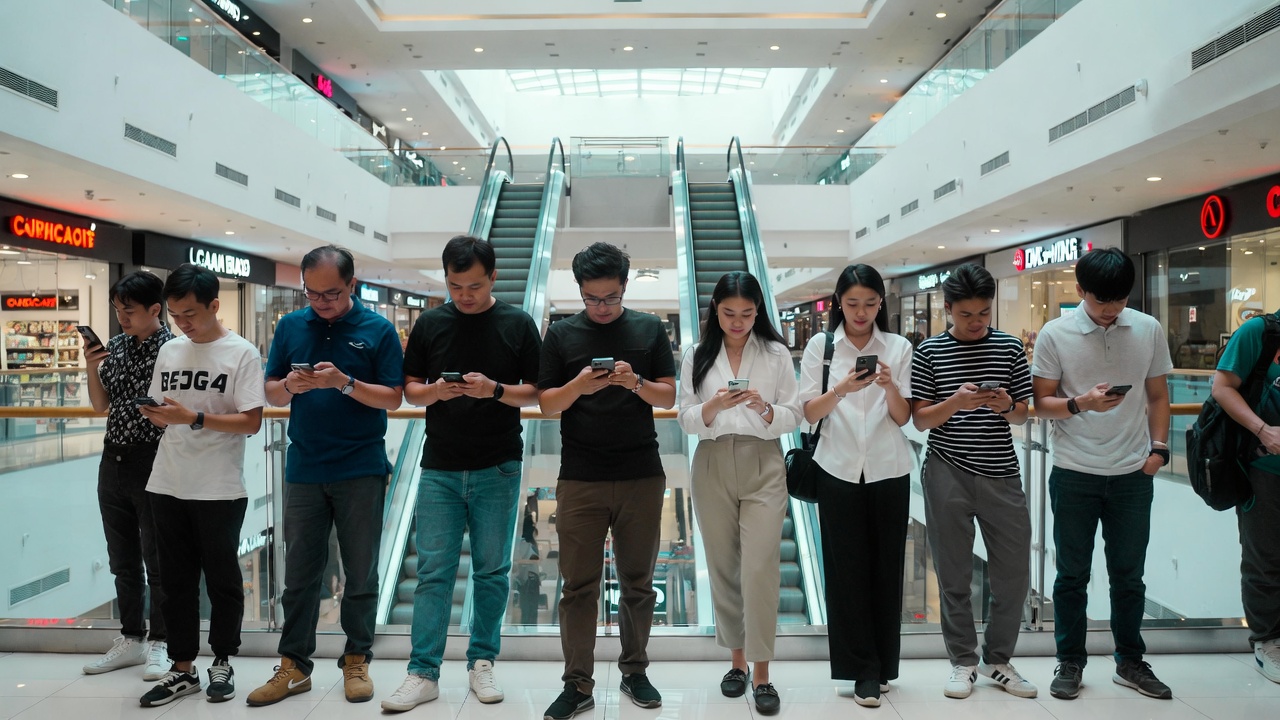
The Philippines has 110 million people spending 10+ hours per day on their smartphones. More than any country in Asia. More than South Korea. More than Japan. More than China per capita.
That's not a market. That's an infrastructure shift waiting to happen.

The Google Play settlement isn't just about $630 million in consumer refunds. It's not about the $70 million going to state attorneys general.
It's about seven years of forced infrastructure openness in the world's largest mobile-first markets.
Google must allow:
Seven years. Starting mid-2026. Ending 2032.
Just like AT&T's Modified Final Judgment forced infrastructure sharing for seven years.
Just like the Baby Bells had seven years to establish market dominance before the Telecommunications Act of 1996 changed everything again.
The pattern is identical.
Here's what Wall Street analysts are missing while they calculate Google's appeal odds:
The Philippines isn't just a market. It's the highest-engagement smartphone market in Asia.
10.5+ hours per day average screen time. Higher than South Korea. Higher than Japan. Higher than any developed market.
80 million GCash users. That's more active mobile payment users than most countries have total population. They're not learning mobile payments—they already live on mobile payments.
110 million internet users on 80%+ Android devices. No iOS legacy to fight. No desktop habits to break. Pure mobile-first infrastructure.
English-speaking developers and users. Zero localization friction. Zero language barrier for app distribution.
$10+ billion app economy growing 25% annually. And Filipinos are paying Google 30% on every transaction.
Here's the crisis-to-revenue flip nobody sees:
Filipinos spend more time on smartphones than anyone in Asia, but pay Western pricing for apps through Google's monopoly. Alternative app stores offering 88/12 splits can undercut Google on price while offering Filipino developers 3x better economics.
This is structural arbitrage, not market opportunity.
A Filipino developer making $10K/year on Google Play keeps $7K after Google's cut. On an alternative store with 88/12 splits, they keep $8.8K. That's a 25% revenue increase with zero additional work.
For users: Apps that cost $9.99 on Google Play can be $6.99 on alternative stores (store takes less, developer makes same amount, user saves $3). In a market where monthly income is $400-600, that's meaningful savings.
Cheaper alternative services + highest smartphone engagement in Asia = perfect disruption setup.
Then you scale to Indonesia and Vietnam:
Indonesia: 270 million people, 86-90% Android, GoPay/OVO ready. You prove the model in Manila, then scale to Jakarta with 3x the population.
Vietnam: 100 million people, 85-90% Android, MoMo/ZaloPay ready. Third market for geographic diversification and risk mitigation.
But you don't start with Indonesia's complexity or Vietnam's regulatory quirks. You start where the smartphone engagement is highest and the infrastructure is ready: Manila.
The pattern:
The United States has iOS at 60%+ market share. Europe is mixed. India has scale but massive regulatory complexity.
The Philippines is the only market where smartphone usage dominates Asia AND the infrastructure is ready for alternative app stores immediately.
I didn't just watch the AT&T breakup. I lived it.
Illinois Bell became Ameritech. The local loop infrastructure suddenly had competition rules. The equipment we maintained became the foundation for competitive local exchange carriers.
Here's what I learned: The companies that moved during the settlement period owned the next decade.
Not the companies that waited for final appeals.
Not the companies that debated regulatory implications.
The companies that built infrastructure while everyone else was reading court documents.
MCI didn't wait for AT&T's appeal to finish. They started building competing long-distance networks immediately.
Sprint didn't debate whether the divestiture would hold. They grabbed fiber routes before the dust settled.
The Baby Bells didn't argue about fair access. They locked in regional dominance during the transition period.
By the time all the appeals were exhausted, the new market structure was permanent.
The Google Play settlement is the same 90-day positioning window. Except it's seven years long.
The $700 million settlement number is noise.
The real numbers:
Philippine Smartphone Engagement (Highest in Asia):
Alternative Store Economics (The Cheaper Services Disruption):
Do the math on the Philippines alone:
Current state: $10 billion app economy, Google takes $3 billion in fees (30% average).
Alternative store scenario (10% market capture by 2028):
That's one country. One market with 10+ hours/day smartphone usage. One 10% market share.
The Filipinos spending more time on smartphones than anyone in Asia are currently paying Western app prices through Google's monopoly. Alternative stores can offer cheaper services (30-40% lower prices) while still giving developers better economics (25% more revenue).
This isn't market expansion. This is infrastructure arbitrage.
When you have the highest smartphone engagement in Asia paying monopoly pricing, cheaper alternative services create immediate adoption.
Then you scale to Indonesia (270M people), Vietnam (100M people), Thailand (70M people), Malaysia (33M people).
The companies building alternative app stores in Manila right now—targeting the market with Asia's highest smartphone usage—aren't competing for scraps. They're positioning for billion-dollar infrastructure plays with built-in cost advantages.
Here's the crisis-to-revenue flip most VCs are missing:
Alternative app stores don't just distribute consumer apps. They distribute B2B SaaS tools without Google's monopoly tax.
Think about AI-driven marketing platforms. Prompt engineering tools. Synthetic intelligence frameworks. Tariff impact analyzers. Compliance certification systems.
Right now, B2B SaaS companies pay Google 30% to distribute tools to Asian enterprises. Or they build web-only platforms that mobile-first executives never use.
Alternative app stores eliminate that choice.
A fractional CMO building AI marketing tools for ASEAN C-suite executives can now:
The Philippine market alone has thousands of SMBs with $3M+ funding looking for AI marketing tools. They're mobile-first. They're Android-heavy. They're price-sensitive to SaaS subscriptions.
An alternative app store positioned for B2B AI/martech tools in Manila could own that vertical before Google's seven-year window closes.
The AT&T settlement gave competitors seven years of guaranteed infrastructure access.
After seven years, the Telecommunications Act of 1996 changed the rules again. New regulations. New market structure. New winners.
The companies that built during the first seven years kept their advantages. The companies that waited got locked out.
Google's settlement is the same pattern.
Seven years of forced openness:
After 2032? Unknown.
New regulations. New antitrust cases. New market dynamics.
The alternative app stores that establish user habits, developer ecosystems, and revenue models during 2026-2032 will own the infrastructure when the window closes.
Just like the Baby Bells.
Just like MCI and Sprint.
Just like every infrastructure play that positioned during regulatory transition periods.
Silicon Valley VCs are funding alternative app store plays in the United States and Europe.
They're building for markets with:
They're competing in Google's strongest markets.
The Philippines is structurally different:
10+ hours per day smartphone usage (highest in Asia). This isn't a market that might adopt mobile-first. This is a market that already lives mobile-first. Every transaction, every communication, every entertainment choice happens on smartphones.
80 million GCash users already transacting on mobile. Users don't need to learn mobile payments. They don't need credit cards. They're already using GCash for everything from buying groceries to paying rent. App stores just need to integrate GCash APIs.
Cheaper alternative services create immediate adoption. When Filipino users are paying $9.99 for apps on Google Play, alternative stores can offer the same apps at $6.99 (developer keeps same revenue, store takes 12% instead of 30%, user saves $3). In a market where average monthly income is $400-600, that's real savings.
Developer economics improve 25-40% instantly. A Filipino developer earning $10K/year on Google Play ($7K after Google's 30% cut) earns $8.8K on alternative stores (12% cut). Zero additional work. 25% revenue increase. That's why developers migrate.
Android dominance is structural, not temporary. The Philippines leapfrogged desktop computing entirely. Smartphones are the primary (often only) computing device. iOS is expensive. Android is the default. That won't change in seven years.
English-speaking developers eliminate localization friction. Philippine developers build in English. Documentation is English. Customer support is English. Silicon Valley companies pay $50K-100K for localization. In Manila, it's unnecessary.
Government support for digital competition. The Philippines' National Telecommunications Commission actively promotes digital transformation and competition. They're not defending Google's monopoly.
Zero entrenched iOS infrastructure to disrupt. In the US, you're asking iOS users to switch platforms. In the Philippines, you're offering Android users (80%+ of the market) better economics on the platform they already use exclusively.
This is why Manila is the primary battleground. Not San Francisco. Not London. Not even Jakarta yet.
Indonesia and Vietnam follow the same pattern:
But you start where smartphone engagement is highest and infrastructure advantages compound: Manila.
If you're running a company with $3M+ funding and you're not evaluating Manila alternative app store positioning right now, you're making the same mistake companies made in 1984.
You're waiting for the appeal to finish.
You're debating whether the settlement will hold.
You're watching what Google does next.
The winners are already building in the market with Asia's highest smartphone engagement.
Here's the executive playbook:
If you're a developer/entrepreneur:
If you're a C-suite executive:
If you're a board member:
The pattern is clear.
The infrastructure shift is happening in the market with the highest smartphone usage in Asia.
Manila first. Jakarta/Hanoi second. The seven-year window is opening.
Your marketing consultant will tell you to "watch and wait" on alternative app stores.
Your tech advisor will say "Google's appeal might overturn the settlement."
Your CFO will argue "The Philippines is too small to prioritize."
They're all wrong.
I survived the AT&T breakup. I watched companies debate while competitors built infrastructure. I saw the seven-year window close and lock out the late movers.
This is the same pattern.
The difference: The Philippines has the highest smartphone engagement in Asia, 80 million GCash users ready for alternative app stores, and structural demand for cheaper alternative services.
Filipinos spend 10+ hours per day on smartphones. They're already transacting on mobile payments. They're paying Google's monopoly pricing for apps.
Alternative stores offering 30-40% cheaper pricing (while giving developers 25% better economics) don't need to convince users. They need to eliminate friction.
The companies that see this now—in January 2026, three months before the final hearing—have a 90-day positioning advantage in Manila.
The companies that move during Q2-Q3 2026 (immediately post-settlement) have a first-mover advantage in the highest-engagement smartphone market in Asia.
The companies that build during 2026-2028 in Manila, then scale to Jakarta and Hanoi, will own the infrastructure when the seven-year window closes in 2032.
The companies that wait for the appeal? They'll be reading case studies about the Manila winners.
The Google Play monopoly settlement isn't a legal story. It's an infrastructure shift.
The AT&T breakup created MCI, Sprint, and seven Baby Bells. Companies that positioned during the transition owned the next decade.
The Google Play settlement creates the same opportunity. Seven years of forced openness. Alternative app stores. Alternative billing. Cheaper services for mobile-first markets.
Manila is where the infrastructure war will be won.
The Philippines has the highest smartphone engagement in Asia. 10+ hours per day. 80 million GCash users. Structural demand for cheaper alternative services. Zero iOS legacy to fight.
Not San Francisco. Not the appeals court. Not the next regulatory hearing.
Your competitors are watching Google's legal strategy.
The winners are building app stores in Manila.
Get MAD Intel on the Manila alternative app store playbook → $10B App Store Market Playbook
— Charles K Davis
Fractional CMO/CTO
SERIO Design FX | Cebu, Philippines
P.S. If you're looking for someone to tell you the Philippines is "too risky" or "too early" to invest in alternative app stores, keep scrolling. I'm not that consultant. I survived the AT&T breakup by positioning during the transition, not by waiting for the appeal. The Philippines has the highest smartphone usage in Asia. The seven-year window is opening. You're either building infrastructure in Manila or reading about the companies that did.
P.P.S. This isn't for startups with no revenue or executives who need validation. This is for C-suite leaders and developers betting millions on the next mobile infrastructure shift in the market with Asia's highest engagement. The pattern is clear. Manila is the primary battleground. The question is whether you see it before your competitors do.

