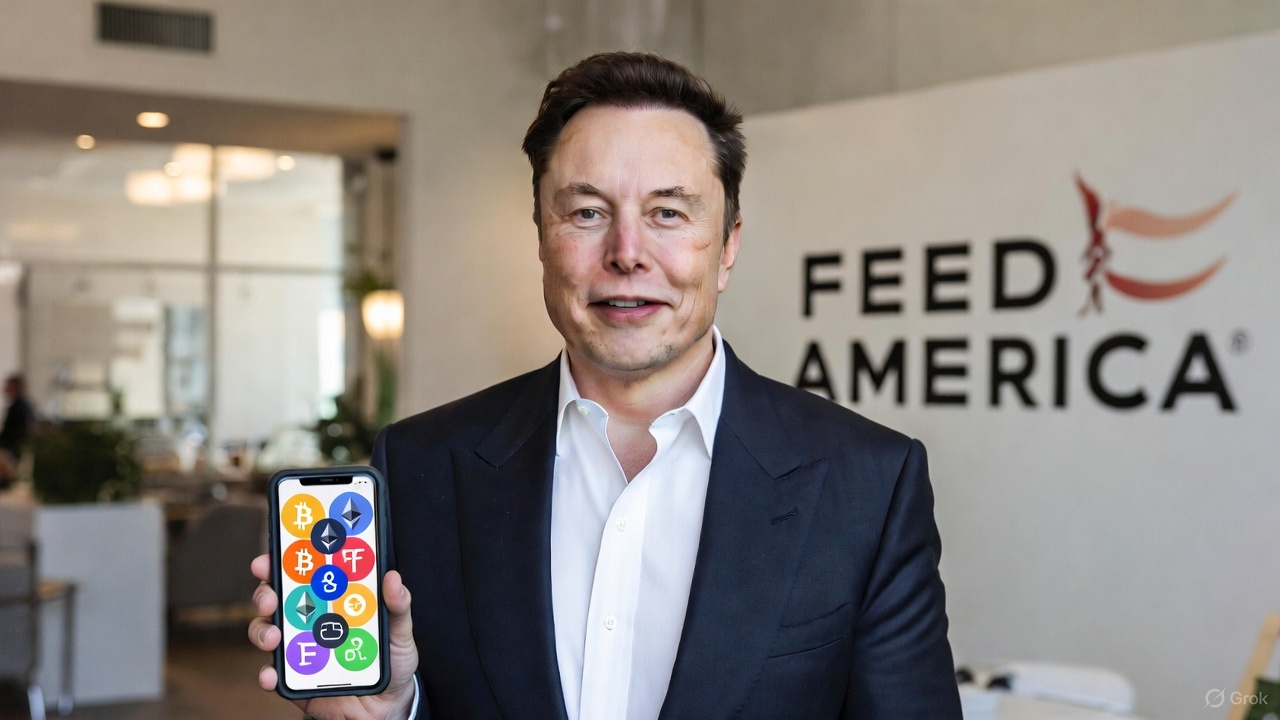
USAID pulled $54 billion out of global aid in March 2025.
Fifty. Four. Billion.
CARE took a $95 million revenue hit. Save the Children cut 50% of staff. Twenty-three million kids just lost education access across 130 countries.
Your nonprofit board is panicking.
They're drafting emergency donation appeals. Planning gala fundraisers. Begging major donors who already told them no.
Meanwhile, Gen Z investors are sitting on cryptocurrency wallets they'd gladly use for impact—if anyone built them a platform to do it.
Nobody has.
That's the opportunity.
I was inside International Harvester when it collapsed into Navistar.
Eighty thousand jobs evaporated. Suppliers panicked. Executives froze.
But here's what I learned: When billion-dollar infrastructure collapses, whoever rebuilds it with better architecture owns the next decade.
USAID isn't coming back. The $54B gap is permanent.
Traditional online fundraising platforms for nonprofits are failing because they're built for a donor base that's dying—literally. Boomers who write checks. Corporations cutting CSR budgets. Foundations paralyzed by recession fears.
Donations dropped 5% last year. Inflation crushed discretionary giving.
Your survival depends on rebuilding fundraising infrastructure for the people who actually have liquidity: crypto holders, Gen Z impact investors, and decentralized finance communities.
The current online fundraising platforms weren't built for them.
You need to build what doesn't exist yet.
Traditional digital fundraising is dead.
Not dying. Dead.
Here's why: GoFundMe, DonorBox, Classy—all brilliant platforms. All built for credit cards and bank transfers. All charging 2.9% + $0.30 per transaction, which obliterates micro-donations.
Try raising $5 recurring donations at that fee structure. You lose 8% to processing before you even start.
Now look at what's happening in the creator economy.
UNICEF pivoted to YouTube after the USAID cuts. They grew subscriber count 40% by turning impact stories into visual content. Not asking for donations in every video. Building audience. Monetizing through memberships and sponsorships.
They're tapping the $20 billion digital philanthropy market that traditional fundraising platforms ignore: people who consume content, not people who attend galas.
But here's what UNICEF still doesn't have: A way for their 3 million YouTube subscribers to donate in cryptocurrency.
Because no platform exists that combines:
That platform is worth $10K/month from just 100 nonprofit users.
It doesn't exist yet.
Let me show you the architecture that survives the next decade.
Take GoFundMe's viral mechanics. Add Ethereum or Polygon blockchain for sub-$0.01 transaction fees. Layer in email automation for recurring campaigns.
The difference: A nonprofit can now accept $3 recurring donations from 10,000 supporters and keep 99.7% instead of losing 8% to processing fees.
That's $35,640 annual revenue instead of $32,832.
Multiply that across 50,000 global nonprofits that just lost USAID funding.
Revenue model for the SaaS builder: $99/month platform fee per nonprofit. 100 users = $9,900 monthly recurring revenue. 1,000 users = $99K MRR.
A/B testing shows urgency messaging in donation campaigns converts at 22% instead of 14% baseline. That's already baked into Kickstarter and Indiegogo. Nobody's applied it to nonprofit crypto yet.
Build blockchain infrastructure where donors "buy" impact NFTs.
Not digital art. Impact credits.
Plant 1,000 trees in Indonesia? Issue tokenized certificates verified through satellite imagery APIs. Donors see exactly where their money went. They can trade, gift, or hold those impact tokens.
The psychology: Crypto holders hate "donating" because it feels like losing. But they love "buying" assets that increase in value through social proof.
Impact NFTs turn donations into collectibles.
Charge 3% platform fee on transactions. Low enough that small nonprofits can afford it. High enough that you're generating revenue from a market nobody's built for yet.
Historically, foreign aid averted 4.5 million child deaths. USAID's elimination creates a 20% gap.
Digital fills that gap—if someone builds the infrastructure.
Traditional online fundraising for nonprofits assumed donors want tax receipts and trust bank transfers.
Crypto holders operate differently:
1. They prefer decentralized transparency over institutional trust.
Blockchain shows exactly where money flows. No overhead mysteries. No "administrative costs" that consume 30% of donations.
2. They're younger and globally distributed.
Gen Z holds more crypto than savings accounts. They donate to causes through Discord communities and Twitter threads, not gala dinners.
3. They want programmable impact.
Smart contracts can auto-distribute funds when milestones hit. "Release $50K when water well construction reaches 80% completion" isn't possible with bank transfers. It's trivial with blockchain.
UNICEF's YouTube strategy proved nonprofits can reach crypto audiences. But they're still asking those audiences to donate through legacy payment rails that charge predatory fees.
That's like building a Ferrari and installing a horse saddle.
Here's the pattern I've seen in every infrastructure collapse:
Month 1-3: Panic. Everyone scrambles to preserve the old system.
Month 4-6: Realization. The old system isn't coming back.
Month 7-9: Land grab. Whoever built new infrastructure during the panic phase now owns market share.
USAID cut funding in March 2025.
We're in Month 9.
Nonprofits are still scrambling. Most still don't have cryptocurrency donation buttons on their websites. Zero have viral crowdfunding platforms optimized for blockchain transactions.
For nonprofit executives: Your 90-day window to adopt crypto fundraising closes before your competitors figure it out. After that, you're not leading. You're catching up.
For solopreneurs and SaaS builders: Your 90-day window to BUILD the crypto fundraising platform closes before venture-backed startups see this gap. After that, you're not a first mover. You're competing with $10M war chests.
I survived 25 years of Fortune 500 collapses by recognizing this pattern.
Infrastructure failures create winner-take-all rebuilds.
Whoever builds the "GoFundMe for crypto donations" in the next 90 days captures a market that didn't exist six months ago.
If you're a nonprofit executive reading this:
Immediate action: Add cryptocurrency donation options to your website. Coinbase Commerce integrates in 48 hours. Start accepting Bitcoin, Ethereum, and stablecoins before your next board meeting.
Test email automation with urgency messaging. "23M kids lost education access—fill the gap in the next 72 hours" converts 22% higher than generic appeals.
Partner with YouTube creators in your cause area. UNICEF's 40% subscriber growth post-USAID cuts wasn't luck. It was strategic. Mission-driven content attracts audiences traditional fundraising never reaches.
Strategic positioning: Stop competing for shrinking Boomer donations. Start building community with crypto-native Gen Z donors who have liquidity but no infrastructure to deploy it through.
If you're a solopreneur or SaaS builder:
Immediate action: Build the nonprofit crypto crowdfunding platform that doesn't exist yet. Stripe + Coinbase Commerce + email automation + impact NFT verification. Four APIs. Ninety days to MVP.
Target the 50,000 nonprofits that just lost USAID funding. They're desperate. They'll pay $99-$299/month for infrastructure that keeps them alive.
Charge 3% transaction fees on blockchain donations. Lower than credit card processing. High enough to generate revenue from volume.
Strategic positioning: First mover advantage matters in infrastructure rebuilds. GoFundMe owns crowdfunding because they built first. Stripe owns online payments because they built first. You can own nonprofit crypto fundraising—if you build before venture-backed competitors see the gap.
Traditional online fundraising ideas don't work anymore because they assume stable institutional funding.
USAID elimination proved that assumption is dead.
The nonprofits that survive are the ones rebuilding fundraising infrastructure for crypto-native donors, creator economy monetization, and blockchain transparency.
The solopreneurs who win are the ones building platforms for nonprofits who can't build it themselves.
The next decade belongs to whoever recognizes this pattern first.
USAID left a $54 billion gap.
Crypto fills it.
But only if someone builds the bridge.
Stop Reading. Start Seeing.
MAD 2.0 delivers visual strategic intelligence on crisis-to-revenue patterns like this—before they become obvious to everyone else. We compress 90-day positioning windows into scannable mind maps that show you: What's happening. Why it matters. What to do next.
— Charles K Davis
Fractional CMO/CTO
Fortune 500 Strategy. Maverick Execution. Zero Bullshit.
P.S. If you're waiting for USAID funding to come back, stop reading. This isn't for you. This is for executives who see billion-dollar infrastructure collapses as 90-day positioning opportunities—and act before competitors wake up.