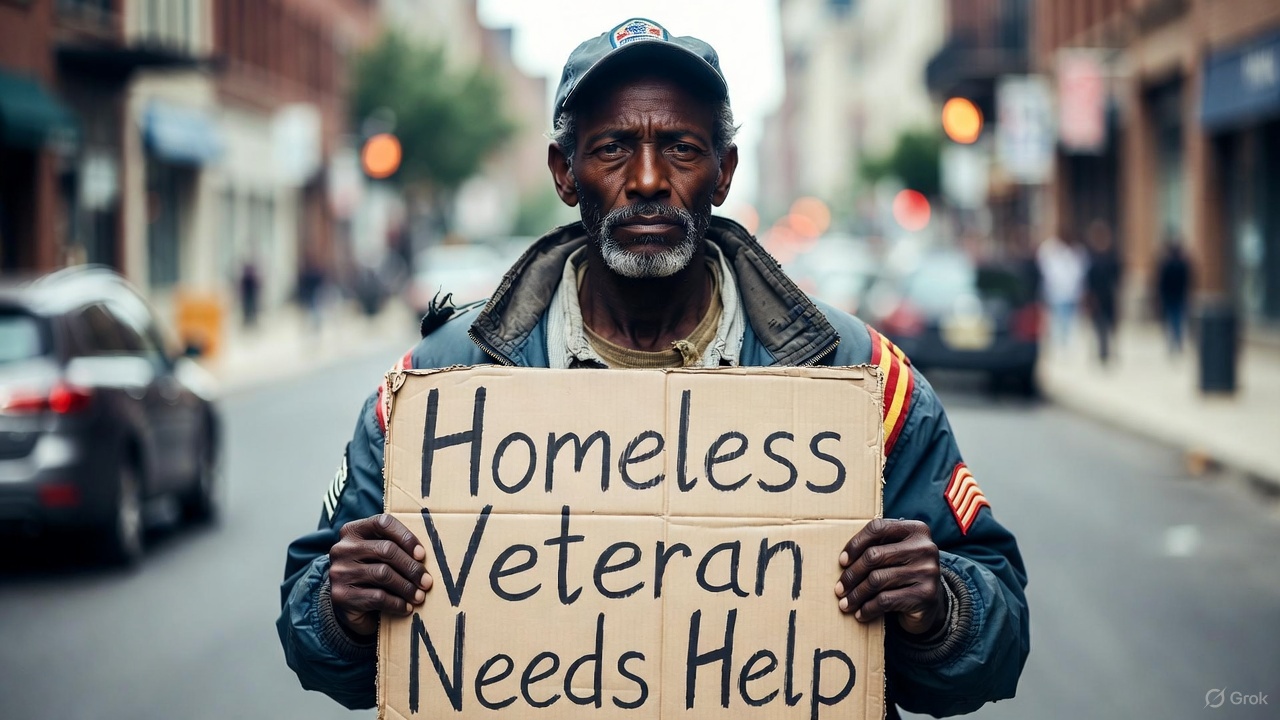
The Biden-Harris administration just handed private operators a $3.2 billion opportunity wrapped in patriotic ribbon.
Most people see the VA's record FY2025 homeless veterans budget as charity. Smart operators see guaranteed government contracts, predictable revenue streams, and a market about to explode in 2026.
While nonprofits scramble for grants and real estate investors debate ethics, the housing market gap is widening. 300,000+ veterans need housing right now. Trump's incoming drug war crackdown will double that number within 18 months.
The 90-day positioning window is open. Here's what you're missing.
I survived the 2008 mortgage crisis from inside the system. I watched government housing programs create billion-dollar opportunities while competitors debated whether it was "appropriate" to profit from crisis.
Same pattern. Different decade.
In 2008, smart operators who understood HUD programs built empires while traditional investors waited for "normal market conditions" to return. They're still waiting.
This isn't charity work. This is infrastructure buildout backed by federal funding with predictable cash flows. The VA's $3.2B budget isn't disappearing—it's increasing. And here's what nobody's telling you: Trump's 2026 policies will create demand faster than supply can scale.
The VA's FY2025 homeless programs budget breaks down into direct money flows to private operators:
$1.1 billion in grants to community providers (34% of total budget). That's 850 grants to private nonprofits, faith-based organizations, and cooperatives through SSVF, GPD, and LSV programs.
Not loans. Grants.
$1.1 billion for HUD-VASH vouchers providing guaranteed rent payments directly to landlords. Veterans get the housing voucher. You get predictable monthly revenue. The VA covers the rent.
$320 million for Grant and Per Diem programs funding transitional housing beds at $82.73 per day per veteran. Do the math: A 20-bed facility generates $604,000 annually in per diem payments alone.
This isn't theoretical. The VA announced hundreds of millions in SSVF grants beginning October 1, 2025. Applications closed March 3, 2025. If you missed that deadline, you're 12 months behind operators who didn't.
Here's the brutal truth your competitors are missing: The VA explicitly encourages shared housing arrangements.
Most operators chase studio apartments and one-bedroom units. Wrong play. The housing market can't supply enough affordable small units. Rents are too high. Inventory is too tight.
The VA published a 40-page Shared Housing Toolkit for SSVF grantees. Translation: The federal government is telling you exactly how to structure profitable shared housing ventures with guaranteed funding.
Shared housing benefits:
Smart operators are buying 4-6 bedroom properties, filling them with HUD-VASH voucher holders, and collecting guaranteed rent payments on every bedroom. While traditional landlords reject voucher holders, these operators are building portfolios backed by federal payments.
The VA will house 51,936+ veterans this fiscal year. They need landlords willing to accept vouchers. Most landlords won't. That's your edge.
While real estate operators chase housing, home care providers are missing the bigger play.
Veterans in permanent housing need ongoing support services. The VA funds that too.
Veterans Independence Program (VIP) provides tax-free annual funding for:
VA Aid and Attendance benefits provide monthly payments for veterans requiring assistance with daily living activities. That's recurring revenue for home care providers serving veteran clients in these new housing properties.
Here's the connection: As private shared housing ventures scale, they create immediate demand for home care services. The veteran moves into the shared housing (funded by HUD-VASH). The veteran needs daily support services (funded by VIP and Aid & Attendance).
You're not selling to broke individuals. You're contracting with government programs backing 300,000+ veterans with predictable funding streams.
Home care providers partnering with shared housing operators capture both sides: housing revenue and care service revenue from the same veteran population.
Trump's July 2025 executive order "Ending Crime and Disorder on America's Streets" changed the game.
The order directs greater use of involuntary civil commitments for homeless individuals with substance abuse and mental health issues. The National Coalition for Homeless Veterans estimates this will disproportionately impact veterans—who are twice as likely to experience homelessness compared to general population.
Translation: The crackdown on drugs and street homelessness will push more veterans into the VA system. The VA's already serving 300,000+ veterans. That number climbs fast when local governments start enforcing Trump's street clearing policies.
The demand spike hits 2026. Supply takes 18-24 months to build. Smart operators are positioning now, before the rush becomes obvious to slower competitors.
The VA offers three primary grant programs for private operators:
Supportive Services for Veteran Families (SSVF):
Grant and Per Diem (GPD):
Legal Services for Veterans (LSV):
The VA prioritizes applicants with:
Nonprofits with existing social service infrastructure have the edge. Real estate operators without nonprofit arms are leaving money on the table.
If you're a developer or real estate investor, here's the revenue pathway:
Month 1: Structure & Research
Month 2: Acquisition & Application
Month 3: Conversion & Launch
The math works: HUD-VASH vouchers cover market rent. Shared housing reduces per-veteran costs. Federal per diem payments stack on top for transitional housing. Home care services generate additional recurring revenue.
Most developers won't move because they're waiting for "normal" market conditions or debating whether it's ethical to profit from government programs.
Good. That's your 90-day window.
Home care providers have a faster entry path:
Immediate Actions:
Revenue Model:
The shared housing boom creates concentrated veteran populations. One property with six veterans means six potential home care clients in a single location. Route efficiency improves. Client acquisition costs drop.
While competitors chase scattered private pay clients, you're building recurring government-backed contracts at scale.
Three things will destroy your positioning:
1. Waiting for "Clarity"
The Trump administration's policies are creating demand volatility. Operators waiting for stable policy conditions will miss the window entirely. Demand spikes don't wait for your research phase.
2. Ethics Paralysis
If you're debating whether it's appropriate to profit from veteran housing, you've already lost. The VA needs private operators. Veterans need housing. Nonprofit hand-wringing doesn't house anyone.
3. Ignoring Accreditation
SSVF Priority 2 funding requires CARF, COA, or Joint Commission accreditation. Starting that process after everyone else figured this out means you're 2-3 years behind. Get accredited now or partner with someone who is.
The housing market isn't fixing itself. Government programs are the only infrastructure scaling veteran housing at speed. Smart operators who understand government contracting will dominate.
Traditional real estate investors who think this is "too complicated" or "not their model" will watch from the sidelines as $3.2B flows to operators who moved faster.
I've seen this cycle before. Government creates massive funding program. Operators hesitate because it looks complicated. Early movers establish positioning. Late movers fight for scraps.
In 2008, I watched operators who understood HUD programs build portfolios while everyone else waited for the market to "return to normal." Some are still waiting.
This isn't normal. This is infrastructure buildout. The VA's budget isn't shrinking—it's growing. Trump's policies are accelerating demand. The 2026 wave is coming whether you're ready or not.
You have 90 days before this becomes obvious to every real estate developer with Google and an Excel model. After that, you're competing instead of leading.
The question isn't whether this opportunity exists. The question is whether you'll move while competitors are still debating.
If you're a real estate developer or investor:
If you're a home care provider:
If you're a nonprofit operator:
The $3.2B is allocated. The grants are launching. The demand is growing. The only question is who captures it.
Stop Reading. Start Seeing.
— Charles K Davis
Fractional CMO/CTO
Get MAD Intel → [Link to MAD 2.0]
P.S. If you're looking for someone to validate your "wait and see" strategy, keep scrolling. I'm not that consultant. This is for operators who see government contracts as infrastructure, not charity. The 90-day window closes whether you believe it or not.